News
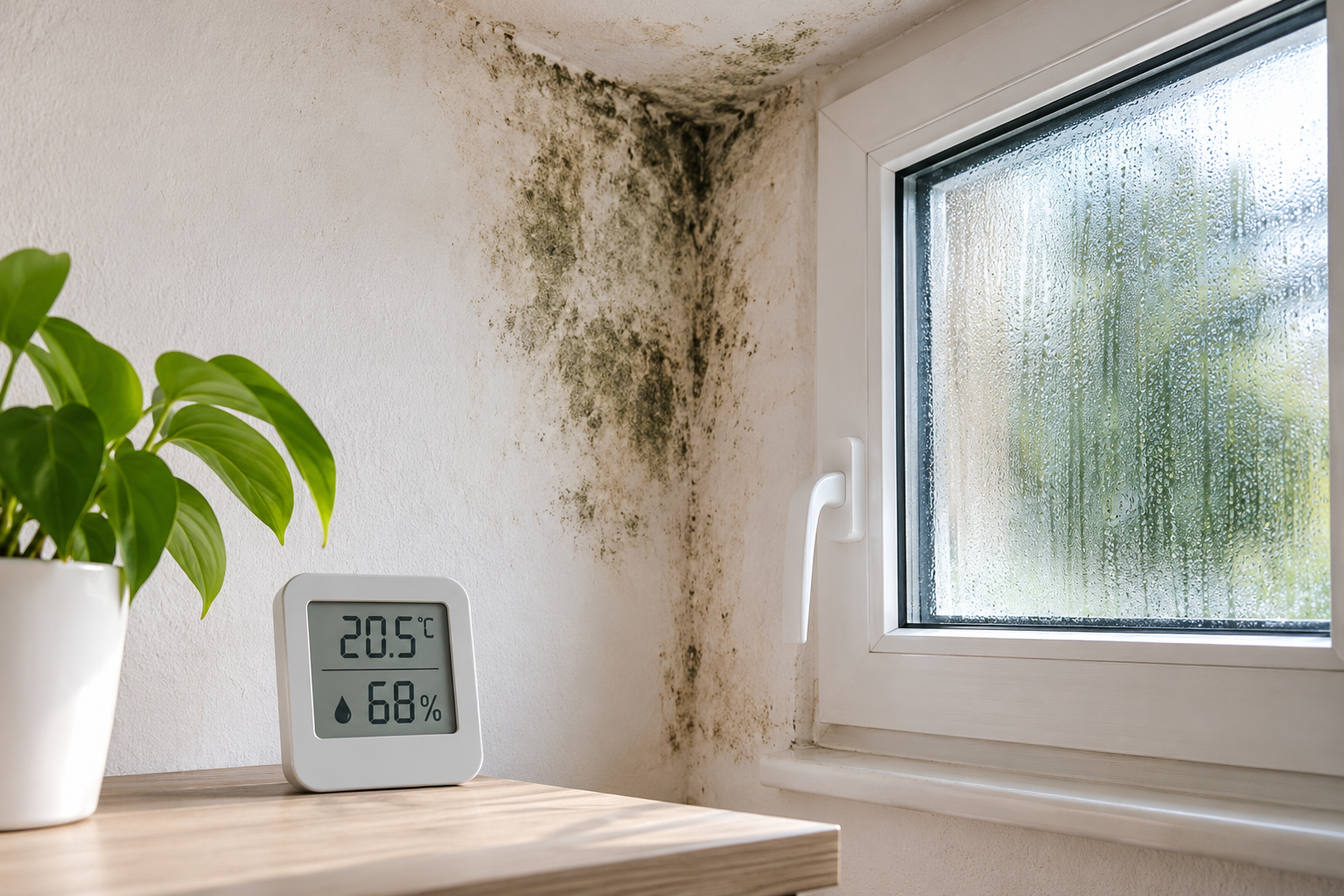
Mold and Moisture in Buildings: From Causes to Solutions
Dark stains on walls, deteriorating plaster, persistent odors, and condensation on windows are warning signs that should not be underestimated.
The presence of mold and moisture in buildings is not merely an aesthetic issue. It may indicate defects in the building envelope, inadequate ventilation systems, or indoor environmental conditions that compromise comfort and occupant well-being.
Identifying the underlying cause is the first step toward implementing an effective solution and preventing the problem from recurring.
MOLD, CONDENSATION AND WATER INFILTRATION: DIFFERENT PHENOMENA
Although they often produce similar visible effects, moisture-related problems can have very different origins.
The most common causes include:
• Surface condensation: occurs when moisture in the indoor air comes into contact with sufficiently cold surfaces;
• Thermal bridges: areas of the building envelope where surface temperatures are lower than those of surrounding elements;
• Rainwater infiltration: water entering through roofs, facades, terraces, or construction joints;
• Rising damp: moisture migrating from the ground through porous building materials;
• Plumbing leaks: water escaping from pipes, drainage systems, or building services.
An incorrect diagnosis can lead to expensive repairs that temporarily conceal the symptoms without eliminating their causes.
THE ROLE OF THERMAL BRIDGES AND INSULATION
Mold growth in buildings is frequently associated with low surface temperatures and high indoor relative humidity.
Wall corners, columns, beams, window reveals, and connections between floors and external walls are particularly vulnerable areas.
Under these conditions, mold may develop even when visible condensation is absent.
A properly insulated building envelope must therefore be designed not only to reduce energy losses but also to ensure appropriate hygrothermal performance at construction junctions.
RENOVATED BUILDINGS: WHY CAN MOLD APPEAR AFTER ENERGY UPGRADES?
Replacing windows and improving airtightness can significantly reduce uncontrolled air leakage.
While this improves energy performance, it also requires effective management of indoor air renewal.
If ventilation is insufficient, moisture generated by everyday activities may accumulate inside the building.
Showering, cooking, drying laundry, and the presence of occupants all contribute to indoor moisture production.
For this reason, thermal insulation, airtightness, and ventilation must be considered as parts of an integrated building system.
BUILDING DIAGNOSTICS: HOW TO IDENTIFY THE ROOT CAUSE
An effective investigation begins with an assessment of the building, its indoor environmental conditions, and the history of the problem.
Diagnostic methods and tools may include:
• Infrared thermography, to identify thermal anomalies and potential thermal bridges;
• Temperature and humidity measurements, to monitor indoor environmental conditions;
• Moisture measurements in building materials, using appropriate instruments and testing methods;
• Building envelope analysis, to assess wall assemblies and their hygrothermal behavior;
• Inspection of waterproofing systems, construction joints, and plumbing installations;
• Environmental monitoring, to understand how moisture-related phenomena develop over time.
Infrared thermography alone does not necessarily demonstrate the presence of water inside a wall. Its findings must be interpreted and, where necessary, supported by additional investigations.
MECHANICAL VENTILATION AS A PREVENTIVE SOLUTION
Mechanical ventilation systems (MVHR or controlled mechanical ventilation) provide a consistent and controlled exchange of indoor and outdoor air, reducing reliance on manually opening windows.
Systems equipped with heat recovery can also reduce the energy losses associated with ventilation.
Their main benefits include:
• Improved indoor air quality;
• Better control of moisture generated by occupants;
• Reduced conditions favorable to surface condensation;
• Filtration of incoming outdoor air;
• More consistent air renewal throughout the building.
However, mechanical ventilation cannot correct water infiltration, plumbing leaks, or unresolved thermal bridges.
To perform effectively, ventilation systems must be correctly designed, sized, installed, and maintained according to the building´s characteristics and actual ventilation requirements.
WHICH REMEDIAL MEASURES ARE TRULY EFFECTIVE?
The appropriate solution depends on the identified cause.
Where thermal bridges are responsible, improvements to insulation or construction details may be necessary.
For water infiltration, the continuity of waterproofing systems must be restored and the points of water entry corrected.
In cases of rising damp, the moisture behavior of the masonry must be assessed, and solutions compatible with the existing building materials should be selected.
When insufficient ventilation is the main cause, improving air exchange may be necessary.
Anti-mold treatments and repainting should not be confused with permanent solutions: unless the underlying conditions are corrected, the problem may return.
HEALTHY INDOOR ENVIRONMENTS AND AIR QUALITY
Persistent mold growth can compromise indoor environmental quality and contribute to respiratory symptoms or allergic reactions, particularly among sensitive individuals.
Prevention requires an integrated approach involving temperature, humidity, ventilation, thermal insulation, and building maintenance.
The objective is not simply to remove visible stains but to restore appropriate and lasting indoor environmental conditions.
RESPONSIBILITIES: PROPERTY OWNERS, CONDOMINIUMS, CONTRACTORS AND PROFESSIONALS
When mold or water infiltration causes property damage, it may become necessary to determine the responsibilities of the parties involved.
Potential causes may include:
• Design deficiencies, such as inadequately resolved thermal bridges or construction junctions;
• Construction defects, including discontinuous waterproofing or improper installation;
• Maintenance failures, affecting roofs, facades, and building systems;
• Occupancy and building management conditions, where these demonstrably contribute to the problem;
• Defects affecting shared condominium elements, potentially influencing the allocation of responsibility.
Determining liability requires a technical assessment of the causes together with an evaluation of the relevant contractual and legal framework.
BUILDING DISPUTES: THE IMPORTANCE OF TECHNICAL EXPERT ASSESSMENTS
In disputes involving property owners, tenants, condominium associations, contractors, and design professionals, photographs alone are rarely sufficient to establish the origin of the damage.
An independent technical assessment or an expert report prepared for legal proceedings can help establish:
• The nature and extent of the moisture-related damage;
• The primary or contributing technical causes;
• The relationship between construction defects and observed damage;
• The remedial works required;
• The estimated costs of repairs and associated damage.
A technical report supported by inspections, measurements, and documented investigations provides an important basis for addressing disputes objectively.
In Italy, such investigations may be conducted within the framework of a court-appointed technical expert assessment (CTU) or a party-appointed technical expert assessment (CTP).
CONCLUSIONS: DIAGNOSIS FIRST, REMEDIATION SECOND
Mold, dampness, and water infiltration should never be treated as simple surface-finishing problems.
They are complex phenomena requiring integrated expertise in building physics, construction technology, mechanical systems, and technical diagnostics.
A proper assessment makes it possible to distinguish symptoms from causes, identify suitable remedial measures, and reduce the risk of ineffective or repeated repairs.
The most effective solution is not the one that conceals the problem, but the one that eliminates its underlying causes.
ARE YOU EXPERIENCING MOLD, DAMPNESS OR WATER INFILTRATION IN YOUR PROPERTY?
DES&CON provides technical support for investigating building defects, identifying their causes, developing corrective solutions, and preparing expert assessments in property and condominium disputes.
Contact us for a preliminary technical assessment.
-
07/11/2026
Mold and Moisture in Buildings: From Causes to Solutions -
29/07/2026
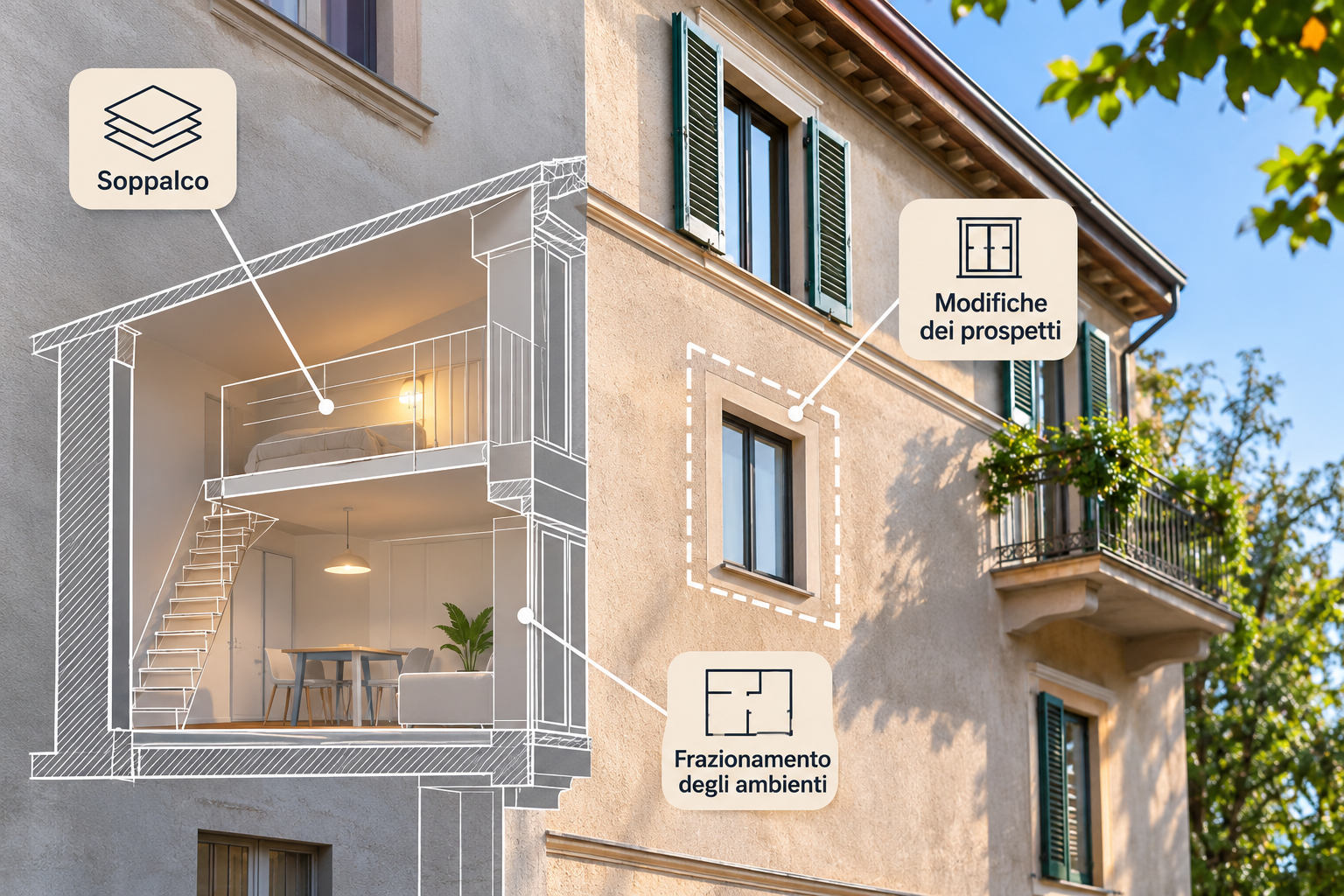
Construction Tolerances: When Building Alterations Become Violations -
02/04/2026
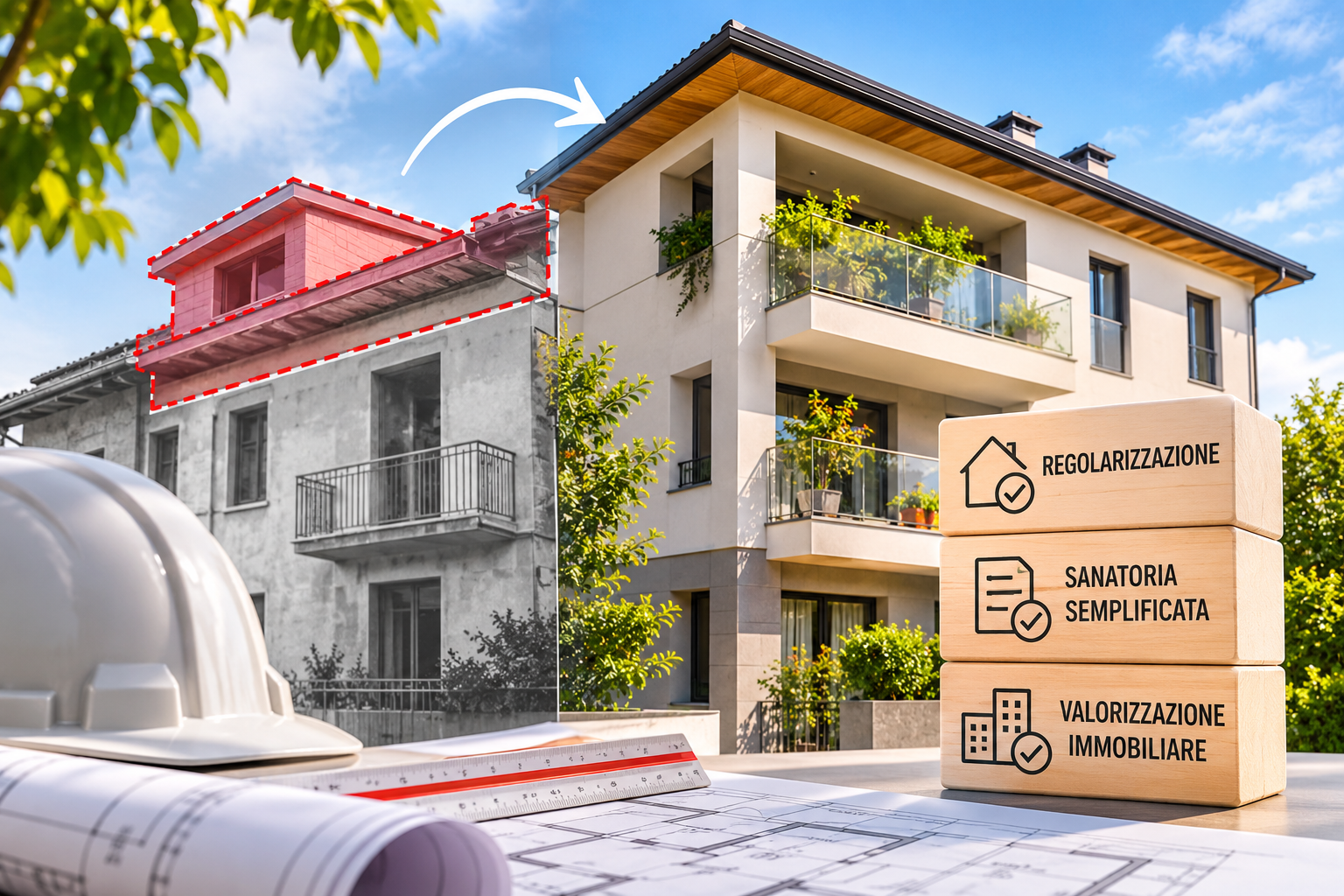
Salva Casa Decree: When Building Irregularities Can Be Legalized Without Demolition -
10/01/2026

Legal Building Status and Cadastral Compliance: Essential Checks Before Buying or Selling Property in Italy -
30/09/2025
Conto Termico 3.0: 2025 Incentives for Energy Efficiency and Renewable Sources -
13/06/2025

Building Distance Regulations: Notarial Council Guidelines on Demolition, Reconstruction, and Out-of-Shape Extensions in Historic Areas -
21/03/2025
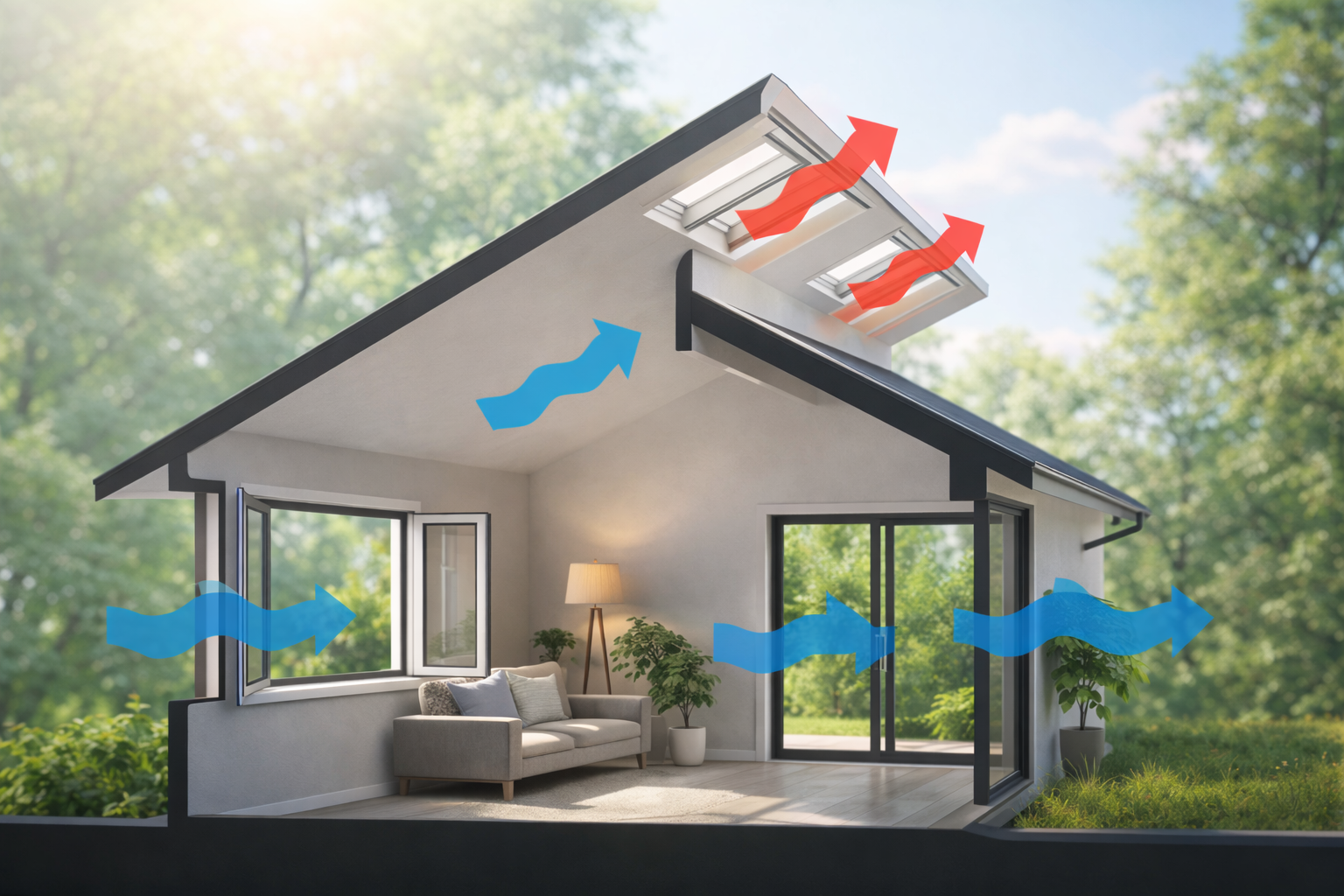
Windows with Integrated Ventilation: Comfort, Efficiency, and Key Limitations to Know -
24/01/2025
Interior interventions and building regulations: when a wall doesn´t become an abuse -
04/10/2024
Exploring the Potential of Renewable Energy Communities